I Cooked Dinner for “Free” Using Solar Power
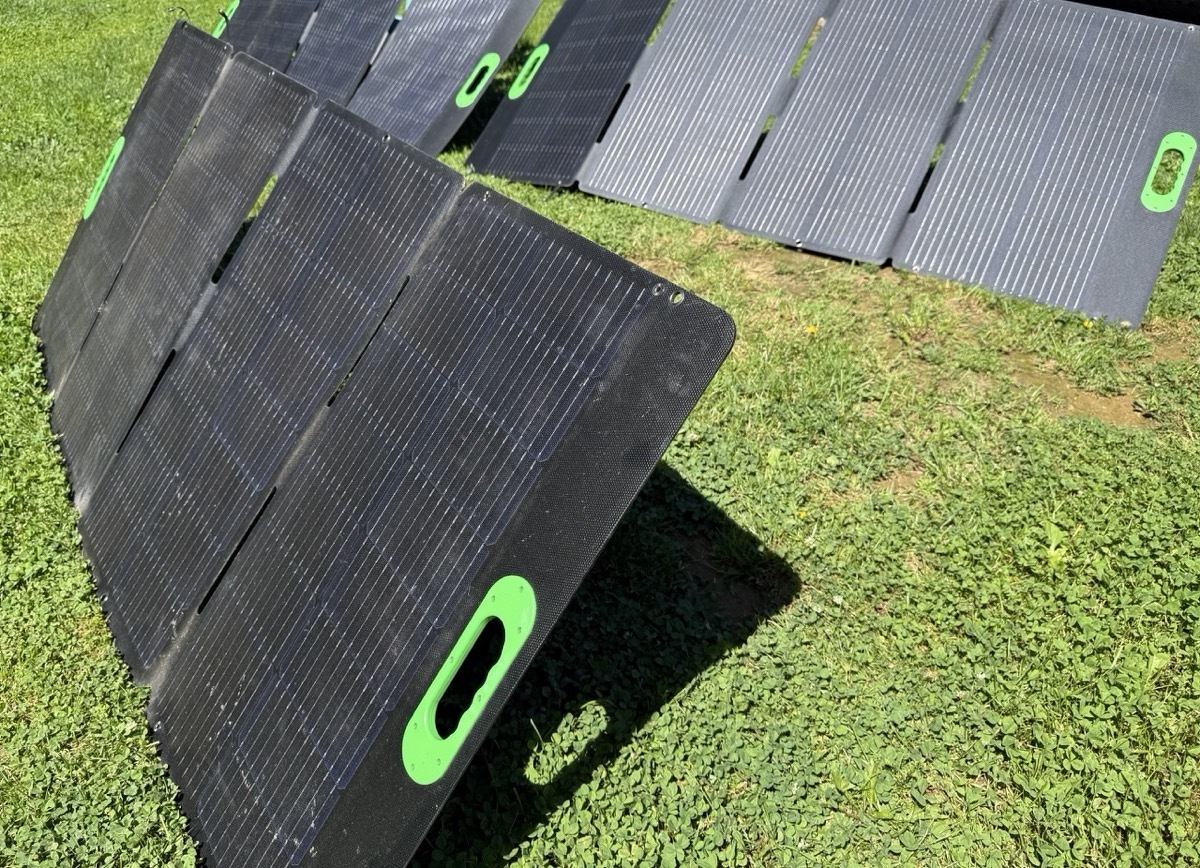 Well… sort of.
Before anyone gets too excited and starts looking for the secret homesteading loophole where vegetables, rice, spices, and olive oil magically appear without a trip to the grocery store, let me clarify: the power I used to cook dinner was free.
The food itself? Absolutely not free.
The grocery store remains stubbornly committed to charging me for things.
But the energy that cooked the meal came from the sun. I used an induction stove plugged into my battery bank, which had been charged by solar. No propane tank. No butane canister. No gas flame. No extension cord running to the wall. Just stored solar power, an induction cooktop, and the quiet satisfaction of knowing the fuel bill for that meal was exactly zero.
Propane, Butane, and Natural Gas Are Convenient, But They Are Not Free
Now, to be fair, gases are popular for a reason. They are incredibly useful.
They are fast. They are portable. They are available in neat little tanks and canisters. Natural gas can come right into your house in many places. If you are camping, living off-grid, dealing with an outage, or just trying to boil water quickly, gases are a practical choice.
Turn a knob, strike a flame, and you are in business.
With gases, you can cook without thinking about watts, watt-hours, input, output, or whether you remembered to angle the solar panels correctly.
Gas is simple.
But here is the catch: every flame has a cost.
Gases may seem cheap initially, but they come with ongoing costs for purchase, transport, and replacement, which can add up over time, making the costs feel more tangible and real for the audience.
And then you are back to buying fuel.
Solar power offers a practical alternative because, once set up, energy is reliably available when the sun shines, providing dependability for off-grid needs.
Once you have the equipment, the energy itself is free at the point of use. The panels collect sunlight. The batteries store it. The induction stove uses it. There is no canister to toss, no tank to refill, and no little voice in the back of your mind saying, “How much propane do I have left?”
The battery percentage becomes the new fuel gauge.
And when that battery was charged by the sun, cooking feels like cashing in stored daylight.
Is Solar the Ultimate Alternative?
That depends on what you mean by “ultimate.”
If by ultimate, you mean “always available, works in every condition, and replaces every other cooking method forever,” then no. Solar is not the ultimate alternative.
Solar has limits.
A battery bank has a capacity limit. An induction stove can draw a lot of power, especially at higher settings. If the battery is small, the meal is long, you can drain stored power faster than expected.
Solar panels also depend on sunlight. A cloudy week, shade, poor panel placement, short winter days, or poor charging conditions can all reduce the amount of energy you collect.
So no, solar is not magic.
It will not make energy planning disappear.
But if by ultimate, you mean “a clean, quiet, renewable way to reduce fuel costs and cook without burning gas when conditions allow,” then solar is an incredible alternative.
Why Induction Makes So Much Sense With Solar Power
Induction cooking is a great partner for solar-generated electricity because it is efficient and direct.
Induction heats cookware directly through magnetic fields, making it faster and more efficient than traditional electric or gas stoves that lose energy transferring heat.
Induction works differently.
It uses electricity to generate a magnetic field that directly heats compatible cookware. The pan itself becomes the heating element. That is why induction can feel so fast and responsive.
For a battery bank, this matters because stored battery power is precious. You do not want to waste energy heating the entire room when your real goal is to heat dinner.
That does not mean induction uses no energy. It can use plenty, especially on high heat. But it can be very efficient because the energy goes straight into the cookware.
Also, there is no open flame.
Induction's safety and efficiency make it a reassuring choice for indoor or small-space cooking, helping the audience feel confident about adopting this modern technology in their off-grid setup.
The whole thing feels almost too civilized for off-grid cooking: a quiet battery, a flat cooktop, a pan, and dinner.
No smoke.
No fumes.
No tank.
No flame.
Just watts becoming warmth.
But Does Solar Work in the Winter?
One of the biggest misconceptions about solar power is that it only works when it is hot outside.
People often assume solar energy and summer heat are basically the same thing. If the air is cold, they figure the sun must not be doing much.
But solar power is not powered by hot air.
It is powered by sunlight.
That distinction matters.
Solar panels collect light, not warmth. A cold, clear winter day can still produce solar power. In fact, solar panels can often perform well in cooler temperatures, because excessive heat can reduce panel efficiency.
The bigger winter challenge is not usually the cold itself. It is the shorter days, lower sun angle, more frequent clouds, snow cover, and shadows that stretch farther across the ground.
In other words, winter solar can work. It just may require more attention.
You may need to place panels more carefully. You may need to adjust their angle. You may need to keep them clear of snow or debris. You may need to accept that charging will be slower on gray days.
But the idea that “solar does not work in winter” is too simplistic.
Solar does not care whether you are wearing a coat. Solar cares whether photons are arriving.
And photons, thankfully, do not take the winter off.
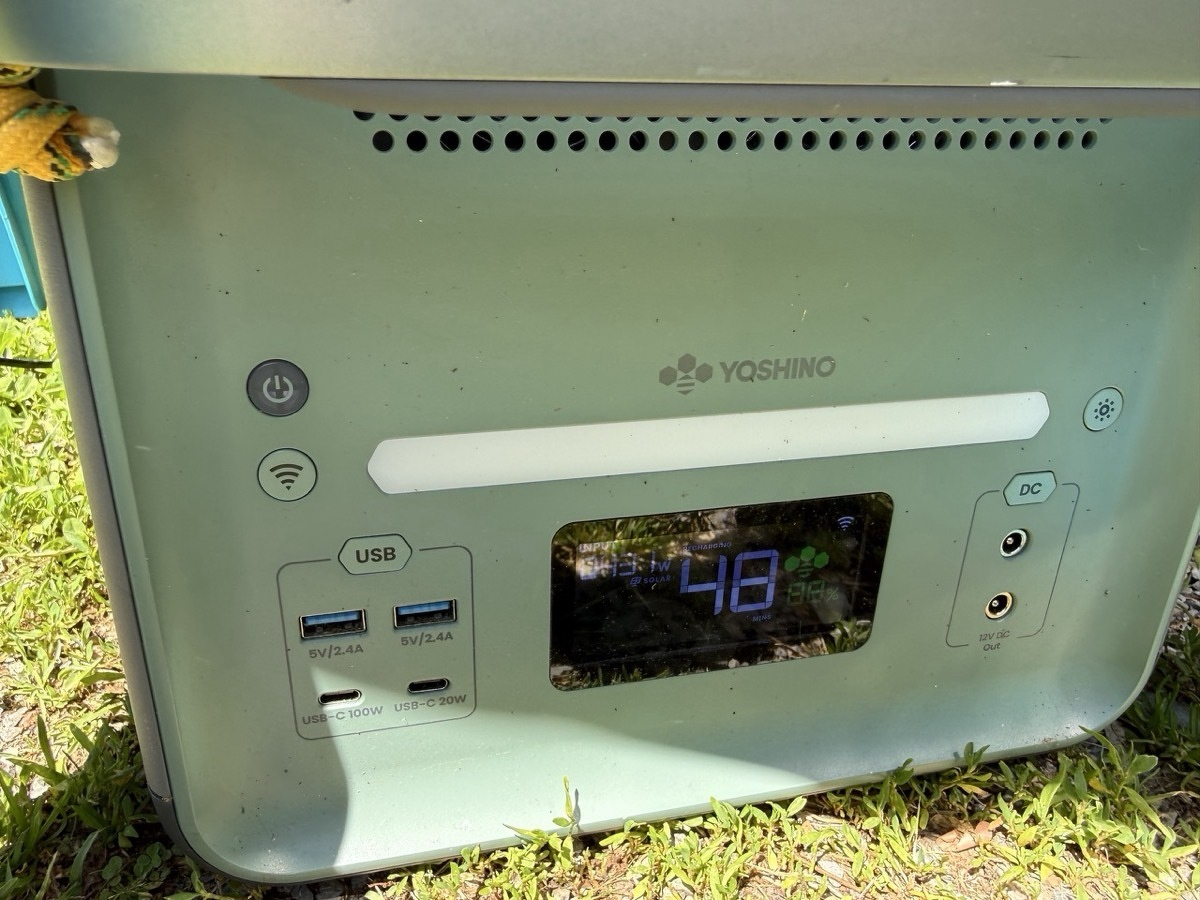 The battery bank Is Basically a Pantry for Electricity.
One way I like to think about a battery bank is as a pantry for power.
When the sun is out, the panels “stock the shelves” with electricity. Later, when you need to run something, you take energy back out.
That is what makes battery banks so handy.
With a battery bank, you can store energy for later use. You are no longer tied quite as tightly to the exact cooking window.
That does not mean you have unlimited power. A pantry can run empty. So can a battery.
But it gives you flexibility.
You can charge during the day and cook in the evening. You can top off the battery when conditions are good. You can save power for the things that matter most. You can decide whether dinner is worth 10%, 20%, or 40% of your battery, depending on what you are making.
That last part is real.
Cooking with stored solar power makes you more aware of energy. Not in a stressful way, necessarily, but in a very practical way. You start noticing which appliances draw a lot of power. You start learning which meals are energy-efficient. You start understanding the difference between boiling water for a few minutes and simmering something for an hour.
You become aware of the invisible cost of convenience.
And then, when the battery was charged by the sun, you also become aware of the invisible gift of it.
Free Power Is Still Not Effortless Power
Of course, solar-powered cooking is not completely free in every sense.
You need equipment. A battery bank costs money. Solar panels cost money. An induction stove costs money. Compatible cookware may cost money if you do not already have it. There is an upfront investment.
You also need to manage the system.
You need to charge the battery. You need to understand its capacity. You need to know how much power your induction stove draws. You need to avoid overloading the batteries. You need to make sure your cookware works with induction. You need to pay attention to how much charge you have left.
Free energy does not mean zero effort.
It means the fuel source itself is free after you have the setup.
That is an important distinction.
Gases cost money every time you replace them, but they offer convenience and energy density. Solar has upfront costs, but the sunlight itself is free and renewable.
Neither is perfect.
Each has its place.
For me, the value is not necessarily in declaring one winner forever. It is in having choices.
Gas when I need it.
Solar, when the battery is charged, and the sun has been generous.
That kind of flexibility feels practical, empowering, and a little bit rebellious in the best possible way.
The Real Lesson From My “Free” Dinner
So yes, I cooked dinner for free.
Again, not the food.
The food was very much not free.
But behind that ordinary moment was something extraordinary: stored sunlight doing useful work.
Gases are useful. Electricity from the grid is useful. I am not giving any of them up entirely.
But I have to admit: dinner tastes a little better when the power is free.
Not the groceries.
Let us not get carried away.
Just the power.